杀马特
书名:女子遭丈夫打死|作者:笑无语|本书类别:古言|更新时间:03:56:29|字数:3896字
一 | There are actors who entertain, and then there is Emraan Hashmi who leaves a feeling behind. His performances are filled with emotion, conflict and a quiet intensity that stays with you long after the film is over. Over the years, he has taken bold roles and created a space for himself that is completely unique. From intense thrillers to heart touching love stories, his characters are always layered and unforgettable. Here are ten of his most memorable films, each representing a different shade of his craft. In This Article 1. Once Upon a Time in Mumbaai (2010)2. The Dirty Picture (2011)3. Awarapan (2007)4. Murder (2004)5. Jannat (2008)6. Gangster (2006)7. Shanghai (2012)8. Hamari Adhuri Kahani (2015)9. Raaz: The Mystery Continues (2009)10. Jannat 2 (2012)1. Once Upon a Time in Mumbaai (2010) Emraan plays Shoaib Khan, a young man with an unstoppable hunger for power. His journey starts in the streets of Mumbai where crime feels like freedom and ambition becomes his only compass. What makes this role unforgettable is the calm confidence he carries even during the most dangerous situations. He is charming, arrogant and ruthless all at once. His scenes with Ajay Devgn feel like a clash of ideologies, one ruled by principles and the other by ambition. The old charm of Mumbai, combined with Emraan’s intense screen presence, turns this film into pure cinematic magic. 2. The Dirty Picture (2011) Emraan plays Abraham, a serious and thoughtful filmmaker who values stories over popularity. At first, he disapproves of Silk’s bold personality, but slowly he begins to see the person behind the chaos. His character represents reality in a world filled with illusion and noise. His silence speaks louder than words, and every glance shows how he carries respect, guilt, admiration, and helplessness at the same time. It is one of those roles where Emraan proves that strong acting is not always loud. Sometimes the quietest character creates the deepest impact. 3. Awarapan (2007) This is Emraan at his most emotional and pure. He plays a man who once lost the love of his life due to his mistakes. When fate brings him to a similar situation again, he decides to fight for someone else’s freedom, as if trying to heal his own past. The story unfolds gently, showing a man who has suffered in silence and carries his pain with grace. His journey from darkness to redemption gives the film a heartfelt meaning. The music, the emotions and Emraan’s internal struggle make Awarapan one of his finest performances ever. 4. Murder (2004) A bold romantic thriller that changed the direction of his career. Emraan plays a mysterious lover who pulls a married woman into a relationship filled with desire, confusion, and emotional risk. His character is magnetic and unpredictable, making the story tense and thrilling. What makes this film stand out is the raw honesty in the emotions. The chemistry between the characters feels real instead of dramatic, and Emraan brings an intensity that makes the film unforgettable. 5. Jannat (2008) This story shows how greed and ambition can change a person’s life forever. Emraan plays Arjun, a man who dreams big and does not believe in limits. He falls into the world of cricket deals and illegal betting, where every decision can destroy everything he loves. The beauty of this film lies in the emotional conflict. On one side, there is love. On the other side, there is temptation, money and fame. Emraan makes the audience feel the excitement and the downfall, both with equal intensity. 6. Gangster (2006) Emraan plays Akash, a singer who brings peace into the life of a troubled woman. His character is soft, patient, and full of emotion. He does not try to impress, instead, he simply understands her pain. That subtle emotional strength makes this character unforgettable. His scenes are filled with longing and quiet heartbreak, and his performance gives the film a soul. Gangster became a hit because of the emotions it delivered and Emraan was a huge part of that. 7. Shanghai (2012) Here, Emraan steps into a world far away from glamour. He plays a small time videographer who gets involved in a political conspiracy much bigger than him. His appearance, body language, and accent are drastically different from his usual image. He does not try to look heroic, he simply becomes the character. As the story progresses, he slowly transforms from a helpless observer to someone determined to reveal the truth. It is one of the strongest examples of his range as an actor. 8. Hamari Adhuri Kahani (2015) This film is about love that is intense, pure, and selfless. Emraan plays a man who understands love in its truest form. He does not want to possess the person he loves, he only wants her to be happy. His eyes carry pain, care, and longing all at once. There are scenes where he expresses emotions without speaking a single word. The film is soaked in emotion and the music adds to the beautiful tragedy. Emraan carries the entire emotional weight effortlessly. 9. Raaz: The Mystery Continues (2009) Emraan brings intensity to a supernatural thriller where fear and emotion merge. He plays an artist who starts seeing frightening visions that lead him toward a dark truth. His performance has a mysterious charm and the story builds tension with every step. He keeps the audience guessing with his seriousness and emotional depth. The film succeeds because Emraan brings sincerity to a story filled with uncertainty and fear. 10. Jannat 2 (2012) A gripping drama set in the world of illegal arms dealing. Emraan plays Sonu, a street smart man who gets pulled into a world he cannot easily escape. The moment he falls in love, his entire life changes. He has to choose between survival and doing what is right. Emraan beautifully portrays the emotional conflict of a man torn between love and danger. The entire film rests on his shoulders and he carries it with complete honesty.Also Read: Here’s the first look of Akshay Kumar and Emraan Hashmi’s Selfiee。
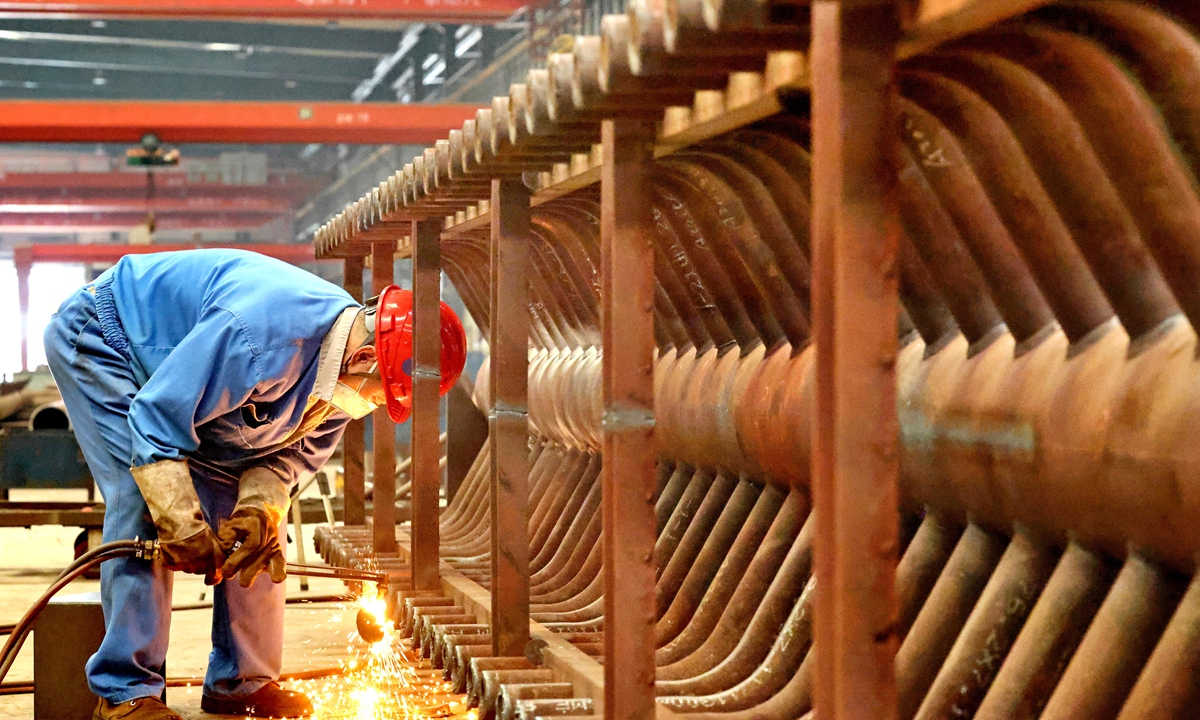
But what are the facts on the ground?
China's Ministry of Commerce recently released a document titled China's Position on the So-Called Excess Capacity Issue. Reviewing the evolution of the global capacity landscape from a historical perspective, it offers an objective analysis of how industrial subsidies, trade surpluses, economic imbalances and market competition relate to "overcapacity," sets out China's policy practices and the direction of its efforts, and puts forward China's ideas and proposals - a forceful response to the "China overcapacity" narrative.
Plainly, the argument that "China's inadequate domestic demand gives rise to excess capacity" rests on a logical sleight of hand - it takes a localized phenomenon at the micro level of the market and applies it wholesale to the structure of the macroeconomy, a picture far removed from reality.
China is not only a major manufacturing power but also a major consuming power. Domestic demand has long been the main engine of the Chinese economy.
To see through the logical fallacy of the "overcapacity" narrative, one must first be clear about where the Chinese economy actually sits in the global landscape.
In the course of economic globalization, China has actively integrated itself into the international division of industrial labor and become the "world's factory" in the truest sense. Chinese manufacturing has enriched the global supply of goods, lowered living costs for consumers in countries around the world, and played an important part in easing global inflationary pressure. But to define China simply as a "producer" on that basis, and from there to conclude that it suffers from "inadequate domestic demand and overcapacity," is a proposition that does not hold water.
From 2013 to 2024, domestic demand contributed an average of 93 percent to China's economic growth, with consumption and investment accounting for an average of 55 percent and 38 percent respectively. China's total retail sales of consumer goods rose from 23.8 trillion yuan ($3.53 trillion) in 2013 to 50.1 trillion yuan in 2025, doubling in size.
Measured at the World Bank's purchasing power parity rates, China's total retail sales of consumer goods in 2025 were 1.7 times those of the US, making the country the world's largest market for consumer goods in all but name. China today ranks first globally in the physical volume of goods consumed, and its per capita annual consumption of some industrial products already approaches the levels seen in developed economies.
China keeps expanding its domestic demand and is working toward a higher-level balance between supply and demand.
Growth in China's total retail sales of consumer goods has slowed somewhat in recent years, and some have taken this as proof of weak domestic demand. That reading is neither objective nor complete.
A strong domestic market provides strategic support for Chinese modernization. The outline of China's 15th Five-Year Plan (2026-30) period devotes a dedicated part to building such a market, stressing the need to adhere to the strategic focus of expanding domestic demand, to expand effective investment, to further implement special actions to boost consumption, to promote the expansion and upgrading of commodity consumption, to unleashing the potential of service consumption, to strengthening the foundation of residents' consumption and to continuously improve the consumption environment - using new demand to guide new supply, and using new supply to create new demand, so as to promote a virtuous cycle between consumption and investment, and between supply and demand, achieve a higher level of dynamic balance between supply and demand.
The slowdown in retail sales growth is consistent with China's shift from high-speed growth to high-quality development, and it also reflects the upgrading of the country's consumption structure. China's consumer market is moving faster from one dominated by goods toward one in which goods and services carry equal weight. Spending on services is growing rapidly and is expected to account for more than half of the total by 2030.
China's super-sized market is not only the bedrock of its own development but also a broad platform on which countries around the world can share in the dividends of that growth.
China has ranked as the world's second-largest importer for 17 consecutive years and is a major export destination for nearly 80 countries and regions. It has granted zero-tariff treatment to 63 countries and regions, becoming the first major economy in the world to extend full zero-tariff coverage to every African country and every least developed country that has diplomatic relations with it. It is also the only country to host an international import expo, having staged eight editions of the China International Import Expo with cumulative intended deals worth more than $580 billion. Over the 14th Five-Year Plan period (2021-25) period, China's cumulative imports topped 90 trillion yuan. These facts and figures show clearly that China is not just the "world's factory" but, still more, the "world's market."
Looking ahead, China's middle-income group is set to exceed 800 million people within little more than a decade, and per capita GDP is expected to reach the level of a moderately developed country. With vast room for consumption and ample potential and vitality, domestic demand will remain the main engine of China's economic development and will keep injecting strong momentum into world economic growth.
This was compiled and translated by the Global Times English edition based on an article published in the "Chisu Jinsheng" economic commentary column of the People's Daily on August 6, 2026.
。

二 |


